
What a nappy caddy does in daily use
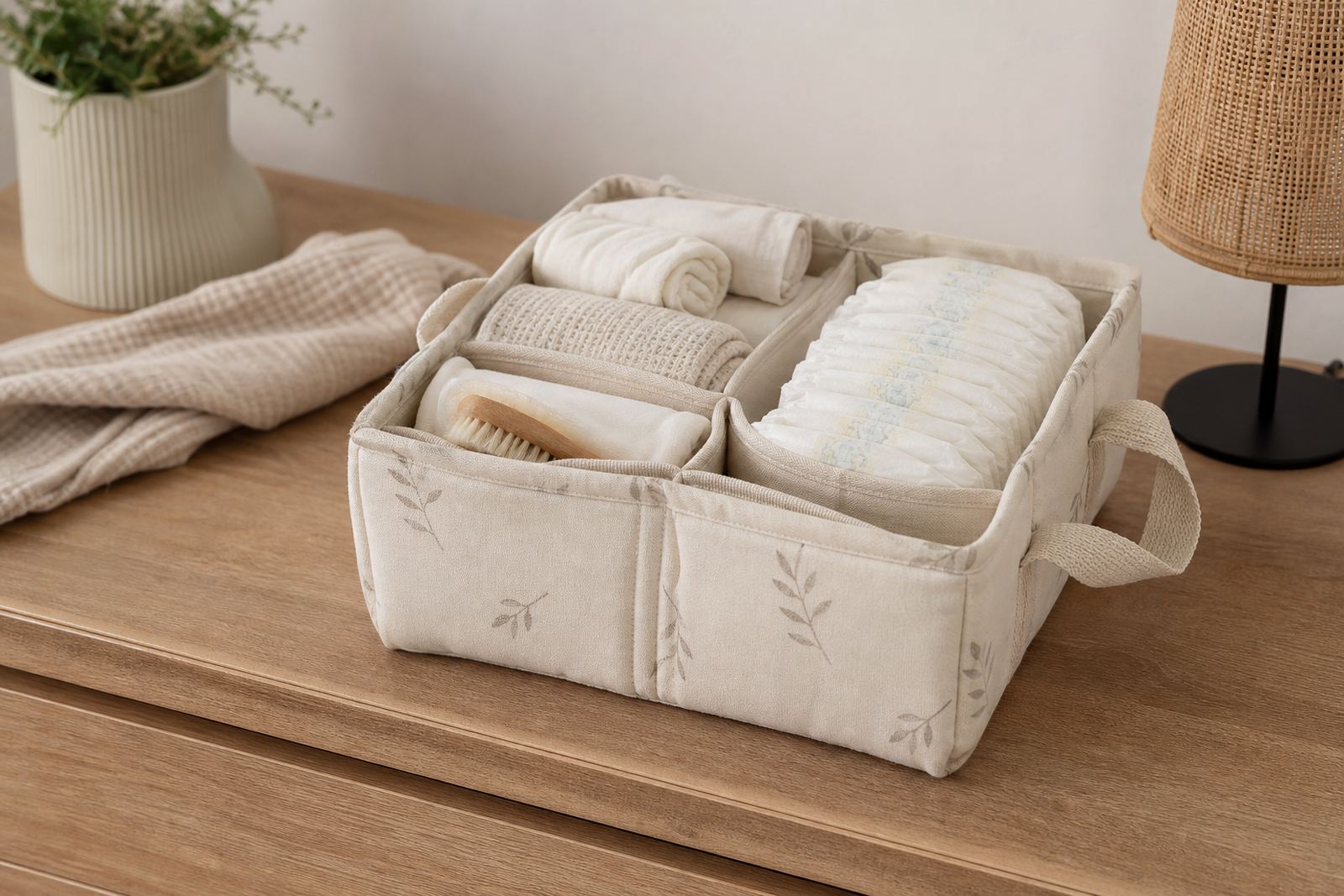
A nappy caddy is a portable organiser with open compartments and carry handles, made for the small items parents reach for most often. It helps keep nappies, wipes, bum cream, cotton wool, muslin cloths and spare vests grouped together, instead of scattered between bedrooms, the lounge and the car. For new parents, that can save time during night changes and reduce the chance of forgetting something important.
It is not a fixed changing unit or a large storage box. Think of it as a moveable caddy that sits neatly next to a cot, on a dresser, beside the bed, or in the boot for outings. Because it is light and easy to lift, grandparents, nannies and caregivers can use the same set-up without needing to move items from room to room.
Sizes, layouts and the options to look for
Nappy caddies are usually made in a rectangular or divided tote style, with a larger central section and smaller side pockets. Some have removable dividers, which is useful when your baby grows and the contents change. For newborns, parents often want a deeper centre section for nappies and wipes, plus outside pockets for creams, thermometer, nail clippers and a spare bib. As your routine settles, you may prefer fewer dividers and more open space.
- Compact size: good for a bedside table or small nursery shelf
- Medium size: practical for a main changing area and everyday use
- Larger size: better for twins, shared homes or keeping extra backups together
- With dividers: helps separate nappies, cloths and care items
- Without dividers: easier to fit bulkier items like swaddles or changing mats
When choosing a style, check the handle height, pocket depth and whether the base stands upright when full. If it collapses too easily, it can be awkward to use one-handed, especially when you are changing a wriggly baby.
Where a nappy caddy fits best in the home
This organiser works well in smaller flats, family homes and shared spaces where a full nursery is not always next to the changing area. Many parents keep one in the bedroom for night changes and a second one in the living room or play area for daytime use. If you live in Durban, humidity can make fabric items feel damp if they are stored in enclosed cupboards, so an open caddy can help keep essentials aired out between uses.
It also suits travel between rooms, weekend visits to grandparents, and quick overnights. In homes where load-shedding affects lighting, it helps to keep the caddy in a fixed spot so you can find essentials by touch and memory. For car trips, a smaller caddy can be packed with the basics for a changing stop or a visit to the clinic.
- Bedroom changing station
- Nursery shelf or dresser top
- Lounge for daytime care
- Car boot for outings
- Grandparent or caregiver home
Installation, setup and power needs
A nappy caddy does not need installation, power or gas. It is ready to use once you place the items inside and put it where it is easiest to reach. That makes it practical for renters, shared homes and families who want a simple setup without drilling, plugs or wall fittings.
To set it up, start with the items you use most often and keep them in the most accessible section. Nappies and wipes usually go in the main compartment, while smaller care items fit into the side pockets. If you are using it near a cot or changing mat, make sure it is stable and out of reach of older siblings who may pull it over. Keep any loose plastic bags, cords or small choking hazards away from baby reach.
There is no servicing required, but it helps to check the handles and seams from time to time, especially if you carry it often or pack it full.
Care, cleaning and everyday upkeep
How you clean the caddy depends on the material. Fabric organisers usually need a gentle wipe with a damp cloth and mild soap, while firmer inserts may be wiped down and left to air dry. If the caddy has a removable insert or liner, shake out crumbs and lint regularly so it stays neat. For families in coastal areas like Umhlanga or Ballito, allowing it to dry fully after cleaning helps prevent a musty smell from building up.
If you use lotions or nappy cream, keep lids tightly closed and place them upright in the caddy where possible. A small leak can spread quickly and leave a sticky patch. Once a week, empty the organiser, dust out the corners and check for items that need restocking. This is also a good time to move outgrown baby items and make space for the next size.
- Wipe spills as soon as they happen
- Air dry before refilling
- Check seams, stitching and handles
- Keep sharp tools in a separate pouch
- Refresh the contents before travel or gift giving
What to check before you place an order
Before ordering, measure the space where you plan to keep the caddy and think about how much you want to carry at once. A small organiser may suit a bedside setup, while a larger one may be better for a full day of changing supplies. Check the number of compartments, handle comfort, material finish and whether the layout suits cloth nappies, disposable nappies or a mix of both.
If you are buying it as a gift, consider a neutral colour and a size that can be used in several rooms. For group gifting or a baby shower, a nappy caddy pairs well with wipes, muslins and a small changing mat. If you are unsure which option fits your needs, use the enquiry form on our contact page and tell us what you want to store. We can help you choose a practical option for home use or delivery anywhere in South Africa.
Health questions about nappies, rashes or baby skin should be directed to a clinic, midwife or doctor. For general baby care, keep products clean, dry and stored safely away from heat and small hands.
Key facts
| Product type | Portable baby organiser for changing essentials |
|---|---|
| Typical use | Nappies, wipes, creams, cloths and small care items |
| Common layout | Main centre compartment with side pockets or dividers |
| Portability | Carry handles for room-to-room use |
| Power or gas | Not required |
| Care | Wipe clean and air dry according to material |