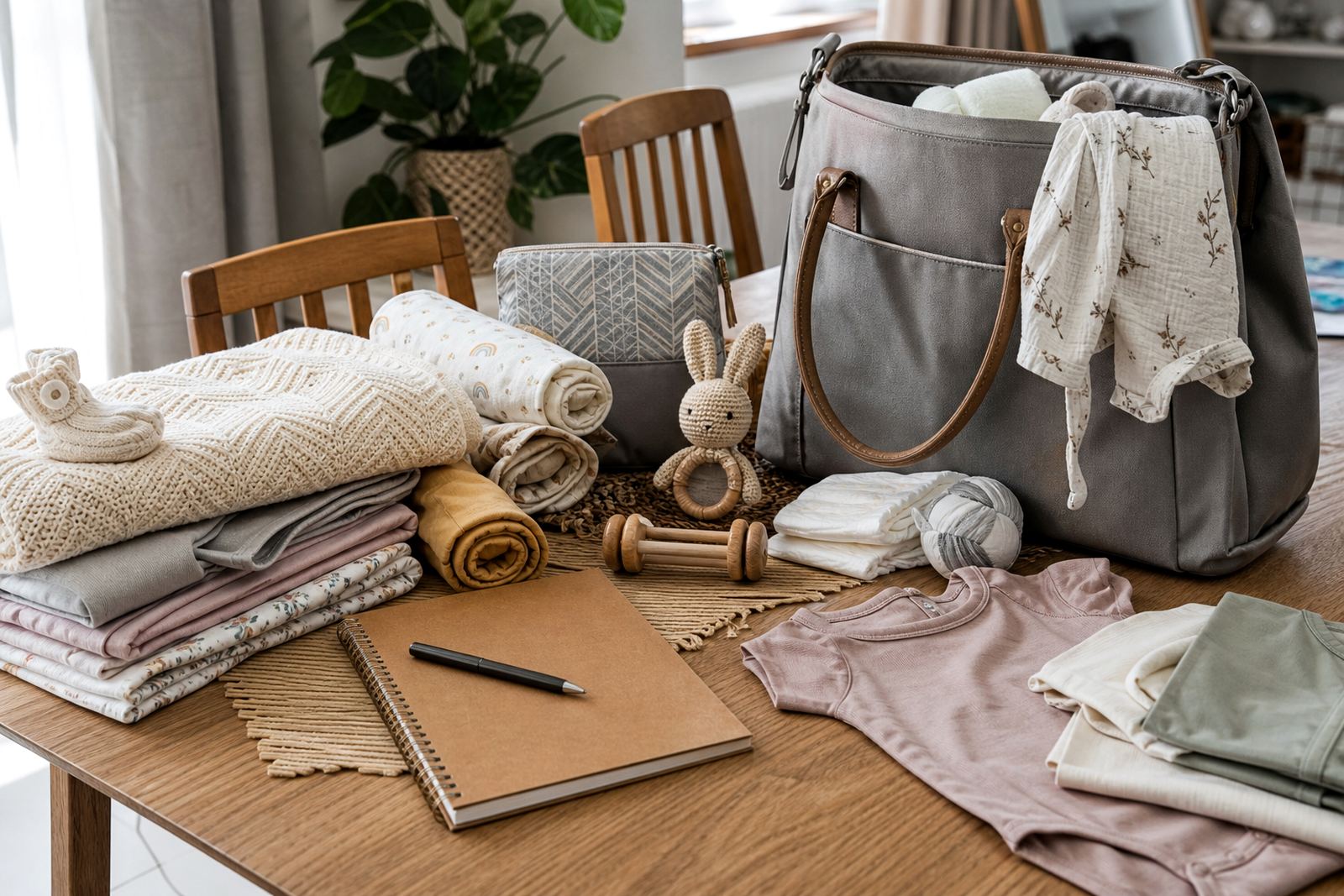
Start with the items you will use first
The best place to begin is with the basics that support the first weeks at home. Most parents find it easier to buy a few practical pieces early, then add the rest as the due date gets closer and your needs become clearer. In Durban and other coastal areas, it also helps to think about heat, humidity and easy washing from the start.
For many families, the first purchases are the ones that are used daily or are needed before baby arrives. That includes maternity wear that fits comfortably, a few soft clothing layers, changing essentials, and simple items for outings and home use. You do not need everything at once, just the things that remove pressure during the busiest time.
- A small set of maternity pieces for everyday wear
- Baby vests, growsuits and socks in a few sizes
- Nappies and changing basics for the first days
- A blanket or two for light cover and travel
- A bag for hospital or clinic visits
Plan your buying around the third trimester
Many parents use the third trimester as the main buying window for larger basics. By then, you usually have a better idea of what type of clothing, storage and gift items you still need. It is also a good time to sort out gift boxes, registry help and group gifting if family members want to contribute.
A useful way to avoid stress is to split your list into three parts. Buy the first part early, the second part in the middle of pregnancy, and keep a final top-up closer to delivery. That leaves room for changing sizes, seasonal weather and unexpected delays, especially if you are ordering for delivery to Johannesburg, Pretoria or Cape Town from Durban.
- Early: maternity comfort items and a few basics
- Middle: clothing in mixed sizes and nursery essentials
- Late: hospital bag items and last-minute gifts
- Anytime: gift vouchers for family who want flexibility
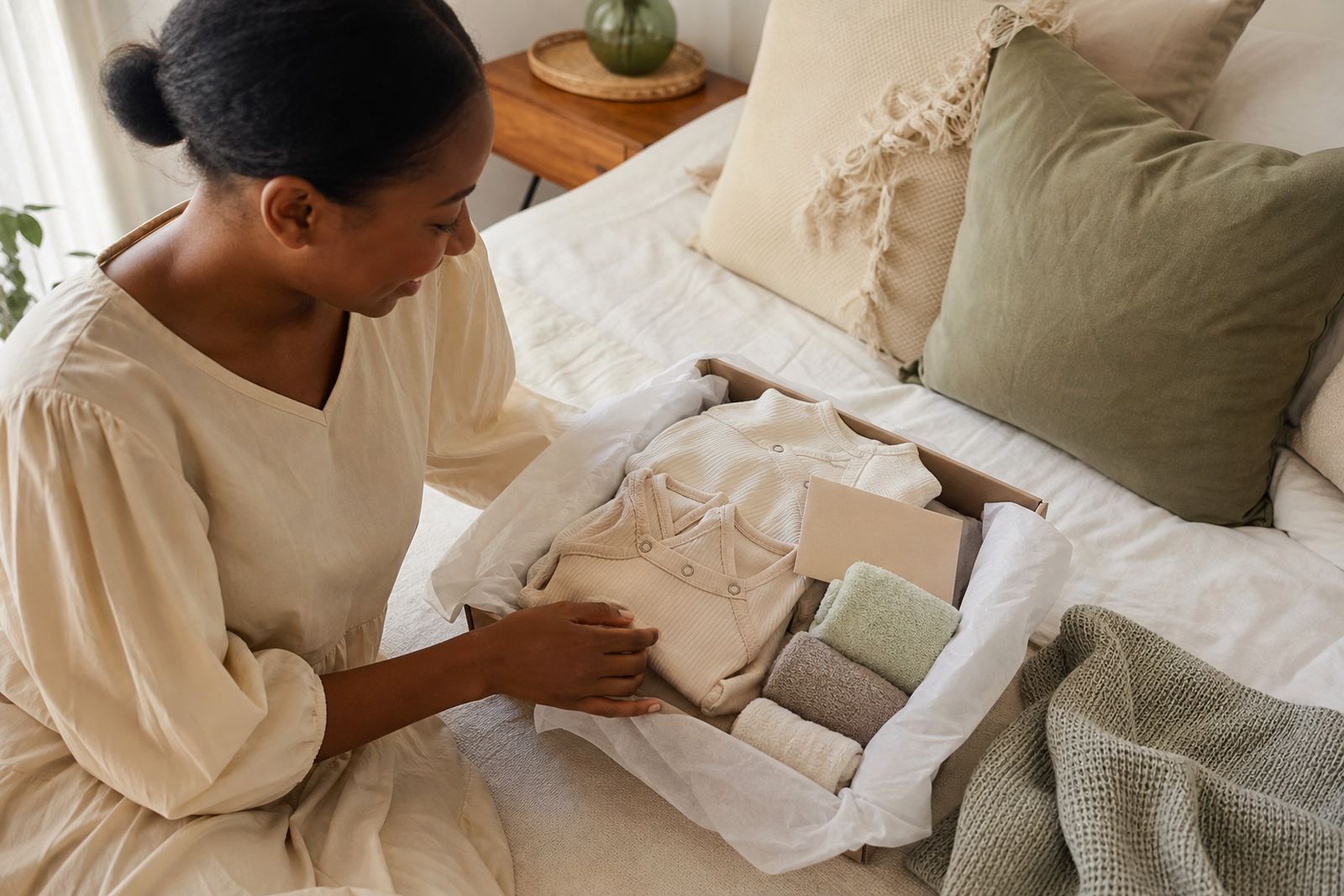
If you are buying for someone else, remember that people often prefer practical gifts they can use straight away. A newborn gift box or maternity gift box can be a helpful choice when you are not sure what has already been bought, or what size will be needed.
Buy clothing in more than one size
One of the most common mistakes is buying too much in one size. Babies grow quickly and maternity needs can change from month to month, so it makes sense to keep a few options ready. This approach saves money and avoids the frustration of having items that are outgrown too soon.
For clothing, think in layers and sizes rather than in one big shop. A small mix of newborn, 0 to 3 months and 3 to 6 months usually gives families a better starting point than loading up on one size only. In summer, lighter fabrics are often easier to manage, while winter calls for warmer layers that are still comfortable indoors.
- Choose soft, breathable fabrics where possible
- Mix short and long sleeves for changing weather
- Keep a few backup outfits in the nappy bag
- Wash new items before first use and check care labels
In KwaZulu-Natal, where weather can shift quickly, lightweight layers are often more practical than heavy outfits. That makes life simpler when you are moving between a warm house, an air-conditioned car and a cooler clinic waiting room.
Use gift occasions to spread the cost
Baby showers, work gifts and family visits can all help spread the cost of basics. Instead of buying everything yourself, you can direct people towards useful items and let them choose what suits their budget. Group gifting works well for larger items and practical bundles, while direct gift delivery is handy when family lives in another city.
This is especially helpful for families in Umhlanga, Ballito or Pietermaritzburg who are juggling transport, work and household costs. If relatives in Cape Town or Gqeberha want to send something, a gift voucher or curated gift bundle can keep things simple on both sides. It also means less duplicate gifting, which is a relief when space is limited.
Helpful ways to use gifting without overcomplicating it:
- Share a short list of what is still needed
- Ask for practical items in mixed sizes
- Suggest gift messages for personal touches
- Choose vouchers when you need flexibility
Make room for safety and everyday practicality
When buying basics, practical use should come before looks alone. Check that items are easy to clean, simple to carry and suitable for the spaces you actually have at home. In flats, small homes or rooms with limited storage, less bulky items are often the better choice.
It is also worth keeping general safety in mind. Follow the product instructions, check sizing carefully and avoid loose items in baby sleep spaces. If you have health questions about pregnancy, recovery or infant care, speak to a clinic, midwife or doctor rather than guessing. Simple common sense goes a long way here, and it is better to ask than worry later.
- Check fastenings, seams and care instructions
- Keep small items out of reach of older children
- Store products away from damp, especially near the coast
- Keep a basic change station ready at home
For families managing load-shedding or busy schedules, easy-care products matter even more. Items that wash well, dry quickly and pack neatly are often the ones that earn their place in the home.
A Durban example of buying in stages
Take a couple in Umhlanga planning for their first baby. They may start with a few maternity pieces, then add baby clothing and changing basics later in the pregnancy. After that, they can use registry help for family gifts and choose a gift box for anything still missing. That way the spend is spread out, and the final list feels manageable rather than overwhelming.
This staged approach also works well when relatives are scattered across South Africa. A grandmother in Johannesburg might send a gift voucher, while a friend in Gqeberha arranges a newborn gift box. Meanwhile the parents can focus on what they actually need for home, the clinic and the first outings.
Buying in stages is not about delaying everything. It is about timing each purchase so it fits your budget, your home and your real daily routine. That practical approach usually makes the whole process feel calmer.
If you are unsure where to start, begin with the items that will be used first and work forward from there. Small steps are easier to manage, and they usually lead to better choices.