
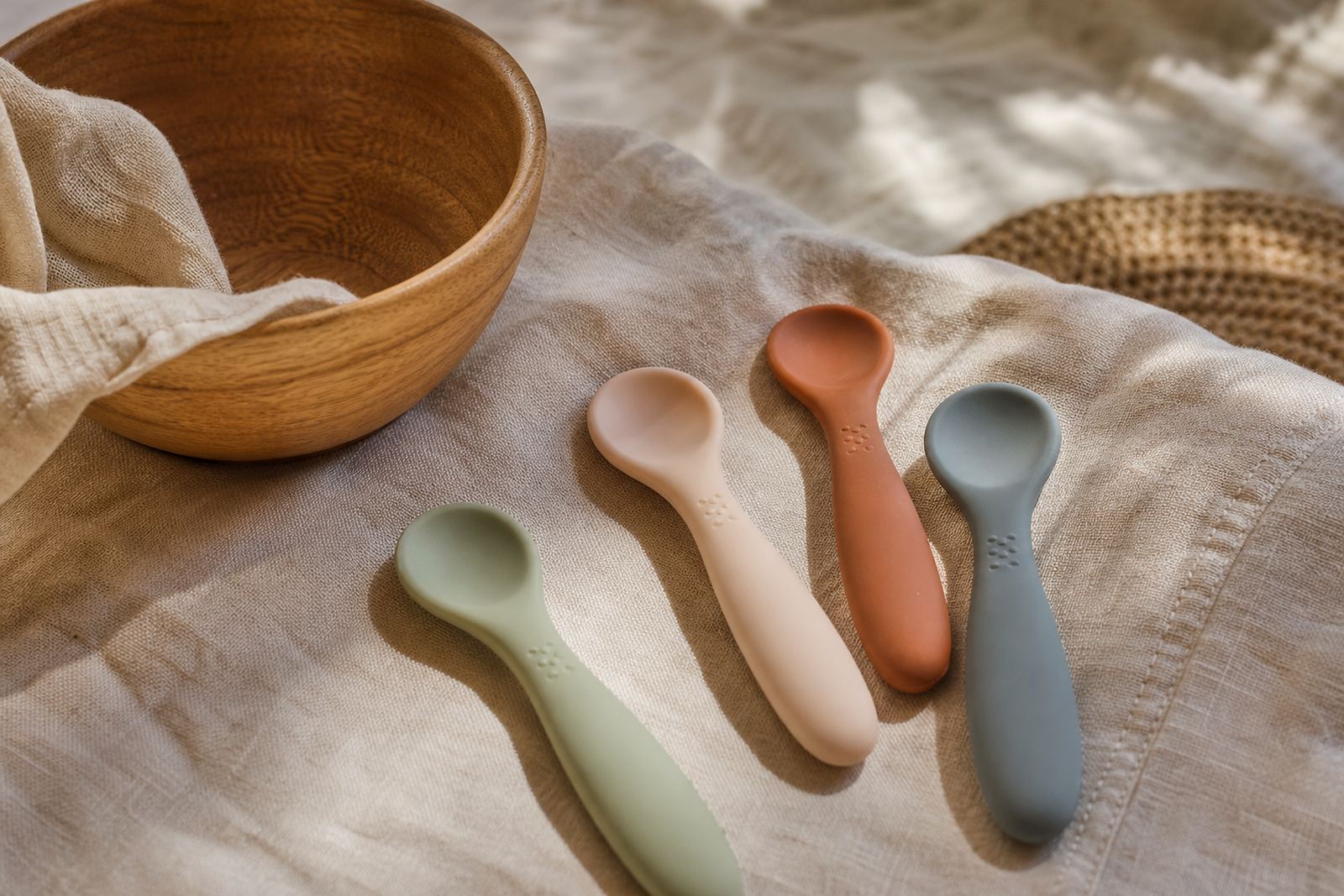
What silicone spoons are used for
Silicone spoons are soft feeding spoons made for babies and young toddlers. The spoon bowl is usually flexible enough to feel gentle on gums and first teeth, while the handle is shaped for an adult or older child to hold comfortably. They are commonly used for porridge, purées, yoghurt, mashed fruit and other soft foods.
For parents in Durban, Johannesburg, Pretoria, Cape Town and Gqeberha, this is the kind of everyday item that fits easily into a nappy bag, kitchen drawer or daycare kit. It is a simple product, but the right shape and size can make feeding less fiddly and easier to manage during busy mornings or after school pick-ups.
As with any baby feeding item, use only under adult supervision. Check the spoon before each use and discard it if it shows cracks, tearing or any loose parts. If you have questions about your child’s feeding needs, a clinic, midwife or doctor is the best place to ask.
Sizes, shapes and finish options
Silicone spoons are usually sold in single units or small sets. Some have a narrow spoon bowl for smaller mouths, while others are slightly wider for thicker foods. Handles may be straight, rounded or easy-grip, depending on the style.
- Length: commonly around 14 cm to 18 cm
- Handle style: slim, rounded or easy-grip
- Spoon tip: soft, shallow or slightly deeper
- Pack size: single spoon, 2-pack or small set
- Colour choice: usually neutral or soft baby colours
Some families prefer one spoon for home use and another for the changing bag. Others order a few at once so there is always a clean one ready when one is in the wash. If you are buying for a gift, a small set is often a practical add-on to a newborn gift box or baby shower bundle.
Where they suit best in everyday South African homes
These spoons suit families looking for a gentle, low-maintenance feeding tool. They work well for early weaning stages, small servings and on-the-go meals. Because they are light and compact, they are also useful when travelling between home, crèche, grandparents or a workday caregiver.
In coastal areas like Umhlanga, Ballito and Gqeberha, soft silicone can be handy because it is easy to rinse and dry after use. In hotter inland areas such as Pretoria and Johannesburg, families often appreciate products that do not need special storage and can be washed along with the rest of the baby items. They are also useful for gift registry lists where buyers want something practical rather than decorative only.
- Suitable for babies starting soft foods
- Handy for daycare bags and travel pouches
- Useful as a spare spoon for messier meals
- Can be added to gift bundles, registry orders or workplace baby gifts
How to use and what no special setup is needed
Silicone spoons do not require installation, assembly, power or gas. They are ready to use straight out of the pack after washing. That makes them one of the easier baby essentials to keep on hand, especially for families managing load-shedding schedules, busy commutes or meal prep at irregular times.
Before first use, wash the spoon in warm soapy water and rinse well. Always test the temperature of the food before feeding, and do not leave a child unattended with any feeding utensil. If the spoon is used for very hot food, let it cool first so the bowl is comfortable to the touch. For children who are starting solids, a small amount of food on the tip is usually enough at a time.
There is no need for fitting, mounting or electrical input. A simple rinse after use and a proper dry is usually enough for everyday handling. Minor typo aside, the main thing is to keep it clean and checked regularly.
Care, cleaning and when to replace it
Most silicone spoons are easy to clean with warm water and mild dish soap. Some can be placed in a dishwasher, but always check the product details first. If you live near the coast, it is a good idea to dry the spoon fully before storing it, especially in humid weather where moisture can linger in containers or lunch bags.
Store the spoon in a clean, dry place away from sharp objects. Do not store it with heavy metal utensils that may scratch or distort the tip. If the spoon becomes sticky, discoloured, cracked or loose at the handle, replace it. A spoon that looks fine but feels rough to the touch should also be checked carefully before use.
- Wash before first use and after each meal
- Dry fully before packing away
- Inspect for tears, rough edges or wear
- Replace if the surface changes or the spoon loses shape
For health or feeding concerns, rather speak to a clinic, midwife or doctor rather than relying on general product advice.
What to check before placing your order
When ordering silicone spoons, it helps to check the length, spoon shape and pack size so you get the right fit for your child’s age and feeding stage. If the spoon is for a newborn gift box, a baby shower gift or a registry purchase, think about whether the family already has feeding basics or needs a small practical starter set.
Also check whether the spoon is suitable for washing by hand or in a dishwasher, and whether it is sold as a single item or in a set. If you are ordering for delivery in Durban, Pretoria, Cape Town or elsewhere in South Africa, make sure the details on colour and quantity are clear before checkout so there is no confusion.
- Check spoon length and bowl depth
- Confirm pack quantity and colour choice
- Look for care instructions and cleaning method
- Choose a set size that suits home use or travel
- Consider if it will be part of a gift bundle or direct delivery
If you need help with a gift order, registry request or group gifting arrangement, clients can reach us through the enquiry form on our contact page.
Simple specifications for day-to-day use
Silicone spoons are a small item, but the details matter. The right size and finish can make everyday feeding easier for parents, caregivers and gift buyers who want something practical that will be used often. Below is a straightforward spec guide for this product type.
Typical options include soft silicone construction, a shallow spoon bowl and a compact handle that is easy to hold. Some are made for single-handed feeding by an adult, while others are suitable for supervised self-feeding as a child gets older. A plain, smooth finish is generally the easiest to clean and store.
Key facts
| Product type | Soft-tipped baby feeding spoon |
|---|---|
| Material | Food-grade silicone |
| Typical length | 14 cm to 18 cm |
| Pack options | Single spoon or small set |
| Care | Warm soapy water, some are dishwasher safe |
| Special requirements | No installation, power or gas needed |