
A simple change-time setup that works every day
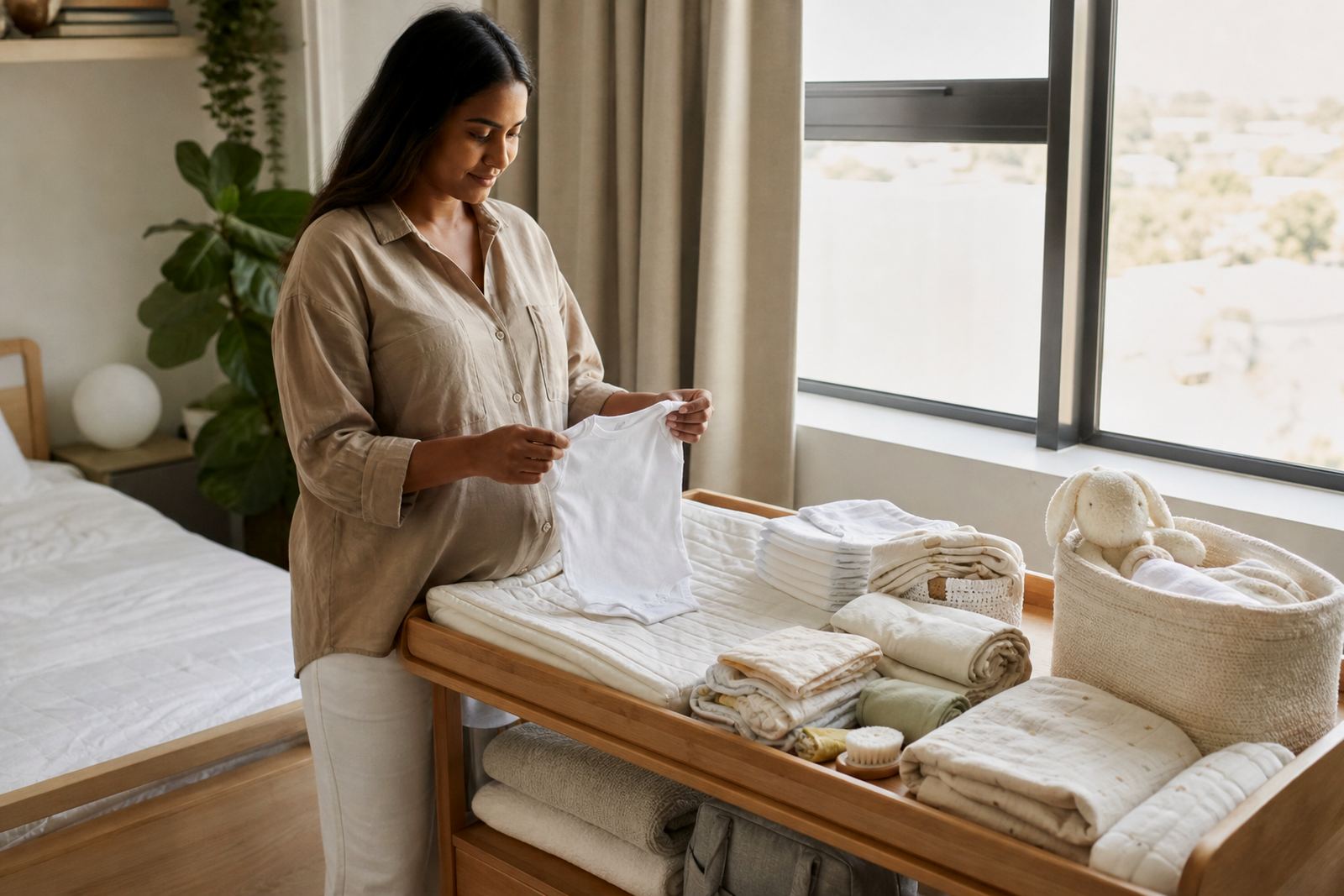
Nappy changes happen many times a day, so the setup needs to be quick, tidy and easy to reach. In a Durban flat, a family home in Pietermaritzburg or a nursery in Johannesburg, the best arrangement is usually the one that keeps wipes, cloths, clean nappies and a spare outfit within arm’s reach. You do not need a complicated system, just a sensible one that saves time when baby is wriggly and you are trying to keep one hand free.
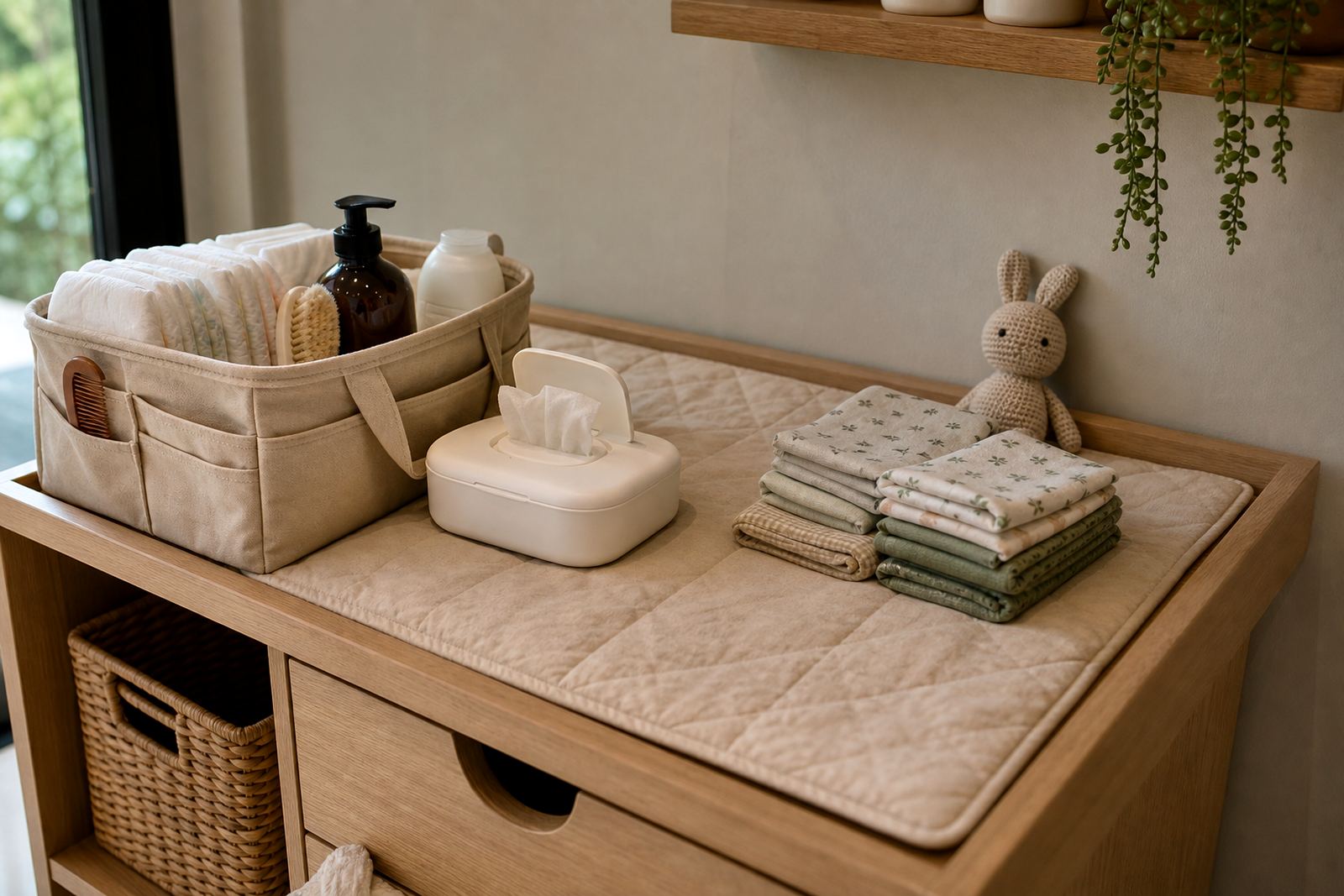
Most parents start with a changing mat, a washable surface protector and a small organiser for the everyday items. Soft cloths, nappy bags, barrier cream and a waterproof pouch for used items are often the core pieces. If you are changing baby on a dresser, bed or floor, the main aim is to protect the surface and keep the area easy to wipe down after each change.
- Changing mat or portable changing pad
- Wipes or soft cloths and warm water in a nearby container
- Fresh nappies in the size currently in use
- Nappy cream, if part of your routine
- Disposable nappy sacks or a lidded bin nearby
For new parents, a calm setup also helps with confidence. A place for everything means less scrambling around, especially in the early weeks when you are still learning what baby needs and what gets used most often.
What usually belongs in a nappy change station
A good change station does not need to be large, but it should be complete. Parents in coastal areas like Umhlanga, Ballito and Gqeberha often prefer wipeable materials because humidity can make fabric items feel damp if they are left open. In cooler inland homes, the focus may be on keeping the space compact and easy to move between rooms.
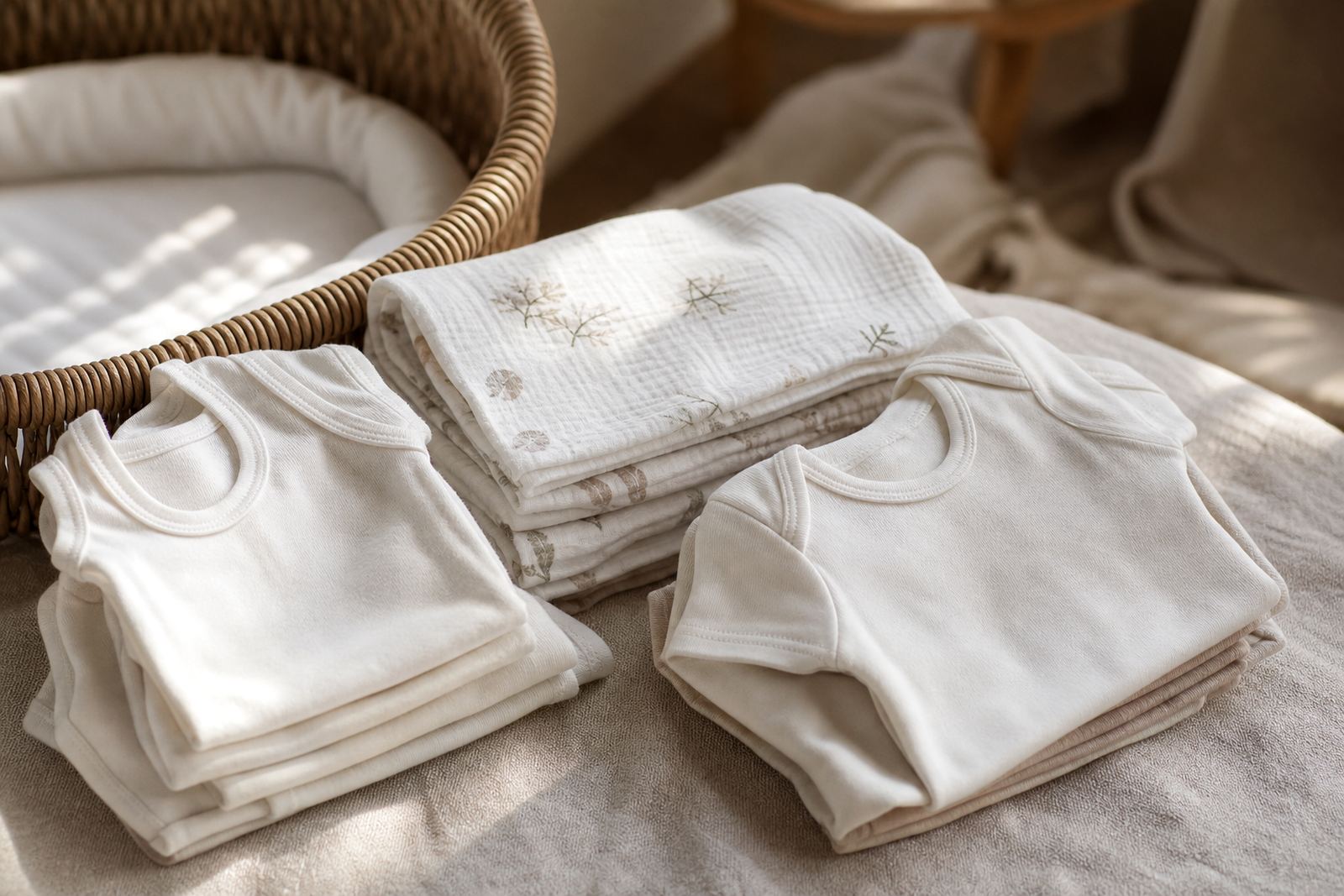
The typical equipment set is usually made up of a few practical pieces rather than a full furniture system. A changing mat is the main surface, while organisers help separate clean and used items. Cloth nappies, inserts, burp cloths and soft towels can also sit together in one basket so you are not hunting through cupboards during a change.
- Compact caddy or basket for small items
- Stackable storage tubs for nappies and cloth essentials
- Washable liners or covers for extra protection
- Small laundry bag for dirty cloth items
- Travel-size organiser for the car or pram bag
If you use cloth nappies, it helps to have a system for storage and washing so used items do not sit too long before the next laundry load. That makes the routine easier and helps keep the change area smelling fresh. For any concerns about skin irritation or unusual discomfort, speak to a clinic, midwife or doctor.
Layout tips for homes, flats and nursery corners
The best layout depends on where you change baby most often. In a small apartment, a folding mat and portable caddy may be enough. In a family home, you might set up one main station in the nursery and a smaller one in the lounge or bedroom. The goal is to avoid carrying half the house around every time there is a nappy change.
Many parents find that a low shelf, wall-mounted basket or rolling organiser helps keep essentials visible without cluttering the room. If you are near the coast, choose materials that wipe dry easily and do not hold moisture. In homes affected by load-shedding, it can also help to keep the area simple and uncluttered so you are not working around chargers, lamps or extra devices during a change.
For shared spaces, neat storage matters. A labelled basket for clean cloths, a separate one for dirty items and one for wipes or nappies can reduce confusion when more than one adult is helping with baby care. It also makes it easier for grandparents, caregivers or older siblings to know where things belong.
Common mistakes that make nappy changes harder
One of the most common mistakes is keeping the essentials too far from the changing area. If you must leave baby unattended, even for a moment, the whole setup becomes stressful. Another mistake is overbuying items before you know what will suit your routine. Some families use more cloths, while others prefer a simpler mix of wipes and disposables. Start with the basics, then adjust as you go.
Another issue is choosing storage that looks neat but does not actually hold enough. A basket that fits two nappies and a packet of wipes may seem tidy at first, but it quickly becomes frustrating. The same goes for mats that are difficult to clean or too small once baby starts rolling more.
- Do not keep the setup spread across several rooms
- Do not store used items too close to clean items
- Do not rely on hard-to-wipe fabrics for daily use
- Do not leave loose creams or small items within baby’s reach
- Do not buy too many specialised items before settling into a routine
General safety reminder: always keep one hand on baby during changes, and never leave baby unattended on a raised surface. If you are unsure about skin care or nappy rash, get advice from a healthcare professional rather than guessing.
Budget ranges in Rand for a practical change-time kit
Budgets can vary a lot depending on whether you are starting from scratch or adding to items you already have. For many South African families, a basic change-time kit can be built in stages. A simple starter setup may include a changing mat, a small organiser and a few cloth essentials, while a fuller setup may add storage tubs, travel items and gift pieces for a baby shower or registry.
As a rough guide, a basic practical kit can start from around R250 to R600, depending on the number of items and the materials chosen. A more complete home setup may sit between R700 and R1 500, especially if you want a few organisers and extra cloth essentials for multiple rooms or for travel. Gift bundles or wrapped sets often fall somewhere in the middle, depending on what is included.
If you are buying for a newborn gift box, workplace baby gift or registry request, it often helps to think in terms of use rather than size alone. A useful set is one that the parent will reach for daily, not just one that photographs well.
What Durban families often ask for when ordering online
Customers in Durban, Umhlanga, Ballito and across South Africa often want baby essentials that are easy to gift and practical enough for everyday use. For nappy change time, that usually means items that are simple to wash, easy to carry and suitable for both home use and quick trips. Direct gift delivery is popular for newborn arrivals, last-minute gifts and group gifting when several people are contributing to one present.
Maata also helps with gift wrapping, gift messages, gift vouchers and gift bundles, which can be handy when you are sending something to a new parent and want it to arrive neatly prepared. If you are planning a maternity or baby shower gift, it is worth thinking about what the parent will actually need in the first few weeks, especially if they are juggling sleepless nights, visitors and a changing routine.
For parents managing the early months, the best change-time products are the ones that save time, stay organised and make the daily repeat tasks feel more manageable. That is the real value of a well-planned nappy change corner.