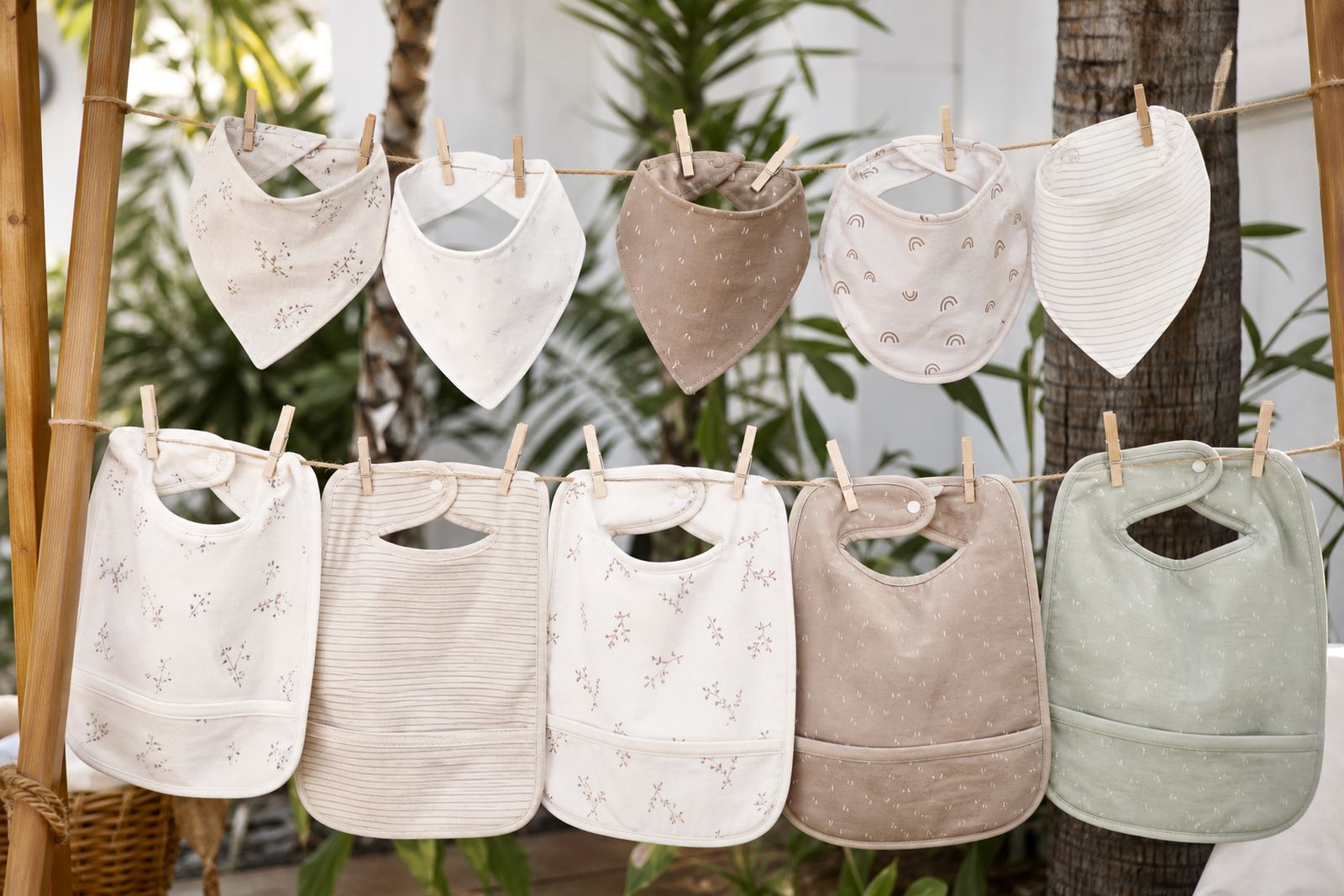
Start with the way your baby uses a bib
The best bib depends on when you will use it. A small, soft bib suits early dribbles and light spills, while a larger bib with more coverage works better once solids start and meals get a bit messier. For teething, look for something absorbent that can handle frequent changes during the day. In Durban’s humidity, quick drying fabric can make laundry easier too.
Think through the day before you buy. A bib for a short car trip to Umhlanga may need to be compact and easy to tuck into a nappy bag, while a bib for home use can be fuller and more protective. If you are buying for a newborn gift, keep to gentle fabrics and simple fastenings that are easy for parents to manage.
Know the main bib shapes before you choose
Shape affects how well a bib covers clothing and how comfortable it feels at the neck and shoulders. Bandana style bibs sit neatly on the chest and are useful for drool or light feeding. Classic rounded bibs give broader front coverage for early meals. Pocket bibs have a catch area at the bottom, which can help with crumbs and small spills. Some bibs are designed with wider shoulders for better front protection, which is handy once babies start moving around more.
If you want one bib for many uses, a mid sized shape is often the easiest starting point. For very active babies, choose a bib that stays flat and does not bunch under the chin. A bib that is too small can leave clothes exposed, while one that is too large may feel bulky and get in the way.
Choose the closure that suits daily changing
Closures matter because bibs are often changed more than once a day. Snap closures are quick and tidy, while Velcro style fastenings are easy to adjust but can catch on other clothing in the wash. Tie closures allow a flexible fit, though they take a little more time to secure. Overhead bibs can be convenient for some babies, but make sure the neckline is gentle and not too tight.
A practical tip is to check whether the closure can be fastened with one hand. That helps when you are holding a wriggly baby or packing for a quick outing. For gift sets, a simpler closure is often a safer choice because it suits more families.
- Check the neck opening before buying
- Look for a closure that is easy to clean
- Make sure the fastening sits flat against the skin
- Choose a style that adults can open and close quickly
Match absorbency to the mess level
Absorbency is one of the main things that separates a light bib from a harder working one. Thin fabric is fine for small dribbles, but it may not be enough for feeds or teething days. Towelling and layered fabric usually soak up more moisture. Waterproof or water resistant backing can help stop wetness from reaching clothing, especially during meal times. If you are buying for regular use, a bib with a good balance of softness and absorbency is usually best.
For cloth bibs, think about drying time as well. In coastal areas like Durban and Gqeberha, air drying can take longer on damp days. If you do laundry often, a bib that dries quickly may be more practical than a thicker one. It is worth having a mix, since no single bib does everything perfectly and thats normal.
- Use light absorbency for drool and short outings
- Choose medium absorbency for everyday feeds
- Pick higher absorbency for messy solids or heavy dribbling
- Keep a few spare bibs ready for changes
Check fabric and finish for comfort
Softness matters because bibs sit close to the neck and upper chest. Cotton and similar soft fabrics are widely used for a reason, they feel gentler and are usually easy to wash. If the bib has a backing layer, make sure it does not feel stiff against the baby’s skin. Smooth edges and neat stitching help reduce rubbing, which is important for everyday wear.
Also look at the finish around the neck and shoulder area. Rough seams, loose threads or hard trims can irritate skin after repeated use. If you are buying for a newborn, keep the fabric light and flexible. For older babies, a slightly firmer bib may hold shape better through active mealtimes.
Build a small bib set for real life in South Africa
A sensible bib set gives you options for home, outings and gifts. Many parents prefer a few everyday bibs, one or two larger meal bibs, and a spare for the nappy bag. If you are ordering for delivery to Johannesburg, Pretoria, Cape Town or Pietermaritzburg, it helps to choose styles that wash and dry well so you can rotate them through the week. A good set should make morning changes quicker, not more complicated.
For baby shower gifts or registry help, you can mix practical and pretty styles without overcomplicating the bundle. Add a gift message if the order is going straight to the family, or group a few bibs with other essentials for a useful present. For health questions about feeding, teething or skin irritation, speak to a clinic, midwife or doctor.
- 2 to 3 light bibs for daily dribbles
- 2 to 3 absorbent bibs for feeds
- 1 bib for the nappy bag
- 1 spare for gifts, outings or emergencies