
Start with the right size for little hands
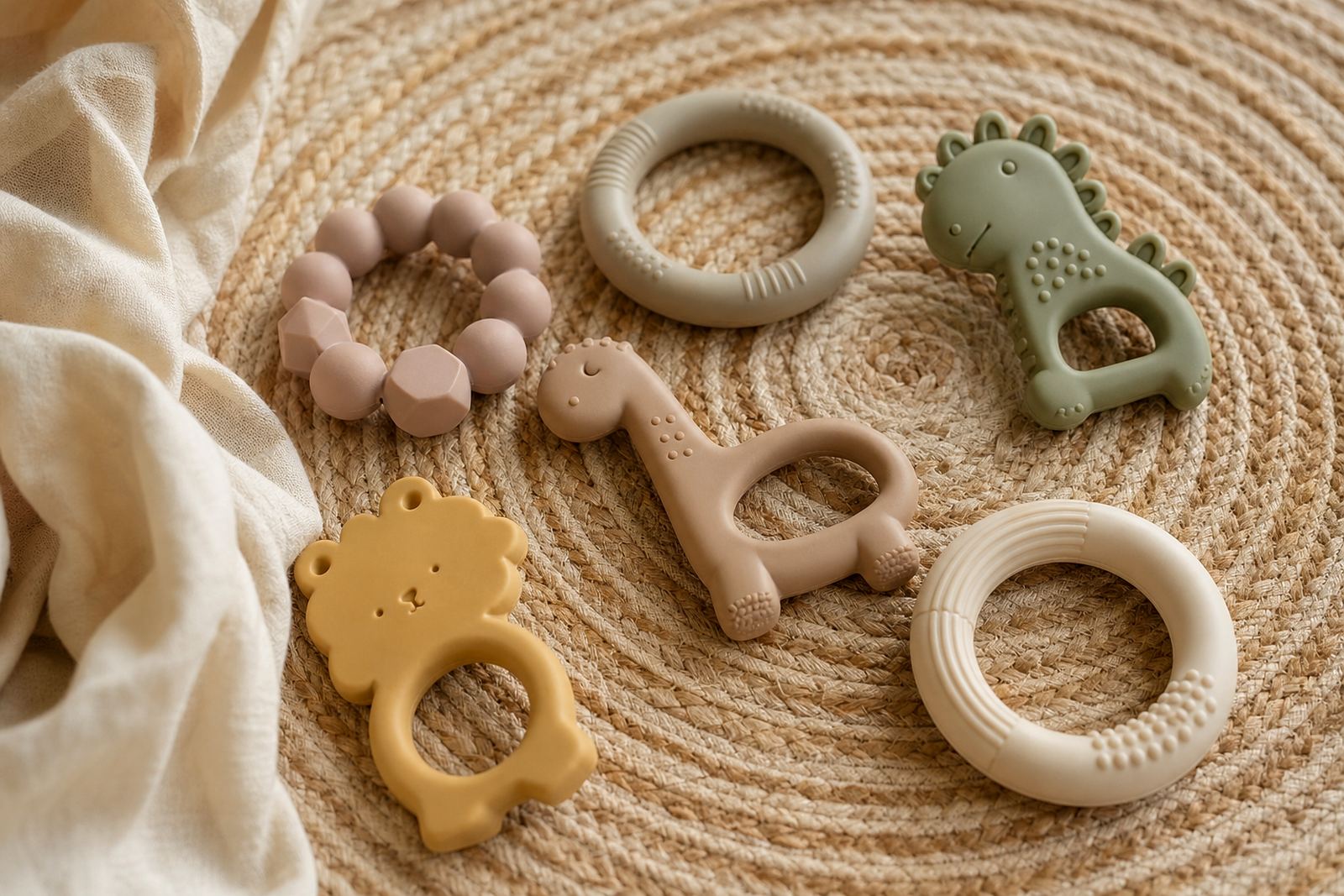
When comparing teething toys, begin with grip size. A toy that is too large can be hard for a baby to hold, while one that is too small may be fiddly and easy to drop. Look for shapes with a centre hold, ring shape or short handles that give tiny hands somewhere secure to grab. In Durban’s humid weather, a good grip also helps when a toy is a little damp after cleaning or drool, which happens often.
Choose a shape that feels easy to manage from different angles. Babies tend to move toys around a lot, so smooth curves and simple forms usually work better than awkward edges or lots of small parts. If you are buying for a gift, a neutral, practical style is often the safest option because it suits both a nursery and on-the-go use.
- Check that the toy can be held in one hand.
- Avoid very thin sections that may be hard to grasp.
- Choose a shape with no loose attachments.
- Make sure it feels light enough for regular use.
Look for textures that are simple, not busy
Texture matters because it changes how the toy feels in the mouth and in the hand. A good teething toy usually has gentle ridges, raised dots or soft sections that are easy to understand at a glance. You do not need a toy covered in lots of different patterns. In fact, simpler is often better because it is easier to clean and less likely to trap dirt.
If you are comparing options, think about how the texture is placed. Raised sections should be even and smooth to the touch, not sharp or rough. A toy with one or two texture zones is often enough. For parents travelling between Umhlanga, Ballito or central Durban, a simpler surface is also easier to wipe down between outings.
- Choose gentle ridges rather than sharp bumps.
- Keep to one or two texture types on the same toy.
- Avoid stitched details that can collect dust.
- Check that textured areas still feel smooth overall.
Pick materials you can clean quickly
Easy-clean materials are important because teething toys need regular washing. Look for surfaces that can be wiped, rinsed or washed without holding onto residue. This is especially useful for families balancing school runs, work and load-shedding, because a toy that dries quickly is easier to keep in rotation. In coastal homes, where humidity can slow drying, practical materials make a real difference.
When you read product details, look for clear care instructions. If the toy needs only a basic wash and air dry, that is often more convenient than anything with complicated joins or hidden pockets. Avoid items with fabric sections unless the care label is very straightforward, because those can take longer to dry and need more attention.
- Choose materials that wipe clean easily.
- Prefer one-piece or simple construction.
- Look for toys that dry quickly after washing.
- Keep care instructions simple and clear.
Check safety details before you order
Before buying any teething toy, give the product description a careful read. The toy should be made for teething use, have no small detachable parts and be free from anything that could come loose during normal handling. If you are gifting for a baby shower or registry, this step matters just as much as choosing something attractive. Safety is always the first filter.
As a general reminder, babies should be supervised when using any toy. Check the item before each use for cracks, tears or wear, and remove it if it starts to break down. If you have concerns about a baby’s mouth, gums or overall health, speak to a clinic, midwife or doctor for proper guidance.
- Inspect for loose parts or weak joins.
- Keep toys age-appropriate and suitable for teething use.
- Do a quick check before every use.
- Replace anything that shows damage.
Choose a style that suits everyday life
A practical teething toy should fit into the routines of real family life. Think about car trips, pram time, visits to grandparents and quick stops at the shops. A compact toy is easier to keep in a nappy bag, while a slightly larger one may be easier to find at home. For deliveries to Johannesburg, Pretoria, Cape Town and Gqeberha, a simple, lightweight choice also makes sense when you want something ready for gifting or day-to-day use.
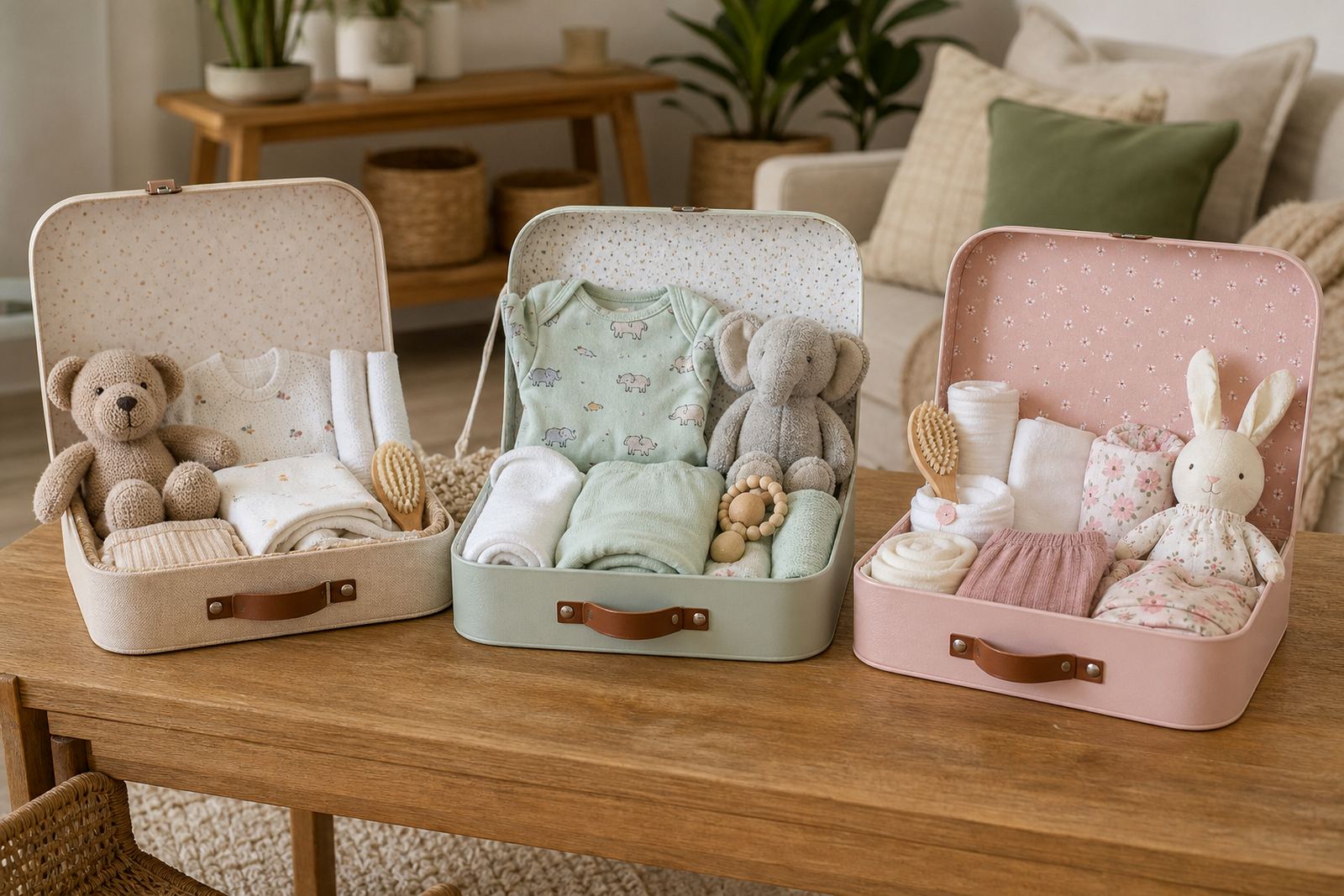
It helps to choose a design that is easy to recognise and easy to store. If a toy is meant to be part of a gift bundle, a neutral look usually works well alongside baby clothing, blankets or other essentials. For workplace baby gifts or direct gift delivery, practical packaging also helps keep the item neat in transit.
- Think about where the toy will be used most often.
- Choose a compact option for bags and travel.
- Keep to simple colours and forms for easy gifting.
- Make sure it stores neatly with other baby items.
A quick checklist before you buy
If you want a fast way to compare teething toys, use this checklist. It keeps the focus on the features that matter most and helps you avoid buying something that looks nice but is awkward in daily use. For many parents, the best option is the one that feels simple, washes easily and gives a secure grip.
Once you have narrowed the choices, think about whether the toy suits a newborn gift box, a maternity gift bundle or a practical add-on for a baby shower present. A well chosen teething toy can be useful without taking up much space and it often becomes one of those small items parents reach for again and again.
- Is it easy for small hands to hold?
- Are the textures gentle and simple?
- Can it be cleaned without effort?
- Does it have any loose parts or awkward edges?
- Will it fit into everyday routines and travel bags?