
Start with the cot mattress size and fitted shape
Before you look at colour or pattern, check the mattress size and depth. A fitted cot sheet should sit snugly around the corners with enough elastic to hold it in place after repeated washing. If the sheet is too loose, it can bunch up at night and if it is too tight, it may be hard to fit and remove for laundry. Measure the mattress in metres or centimetres if you are unsure, then compare those measurements carefully before ordering.
In Durban and along the coast, nursery linen can feel damp on humid days, so a proper fit matters even more. Sheets that stay in place and dry well are easier to manage when you are washing often or dealing with load-shedding and limited drying time. A simple rule is to choose fitted sheets made for the cot size, not a generic square that only sort of matches. It saves time and it gives a tidier finish on the mattress.
Choose a fabric that feels gentle and washes well
The best fabric is usually the one that feels soft against the skin and stands up to regular washing. Cotton is a common choice because it is breathable and generally comfortable in warm weather. Cotton blends can also work well if they are made for nursery use and keep their shape after washing. For South African homes, that wash-and-wear factor matters, especially when you need linen dry by the next day.
Think about your own routine too. If you prefer a smoother feel, look for a neatly woven finish. If you want something slightly warmer for cooler months in Johannesburg, Pretoria or Pietermaritzburg, a fabric with a little more body may suit you better. Avoid anything that feels scratchy or thin enough to show the mattress through it.
- Feel the fabric if possible, or read the product details closely.
- Choose materials that are easy to launder and dry in your climate.
- Keep a spare set in case of spills, nappy leaks or a late-night change.
Keep at least two or three sets ready
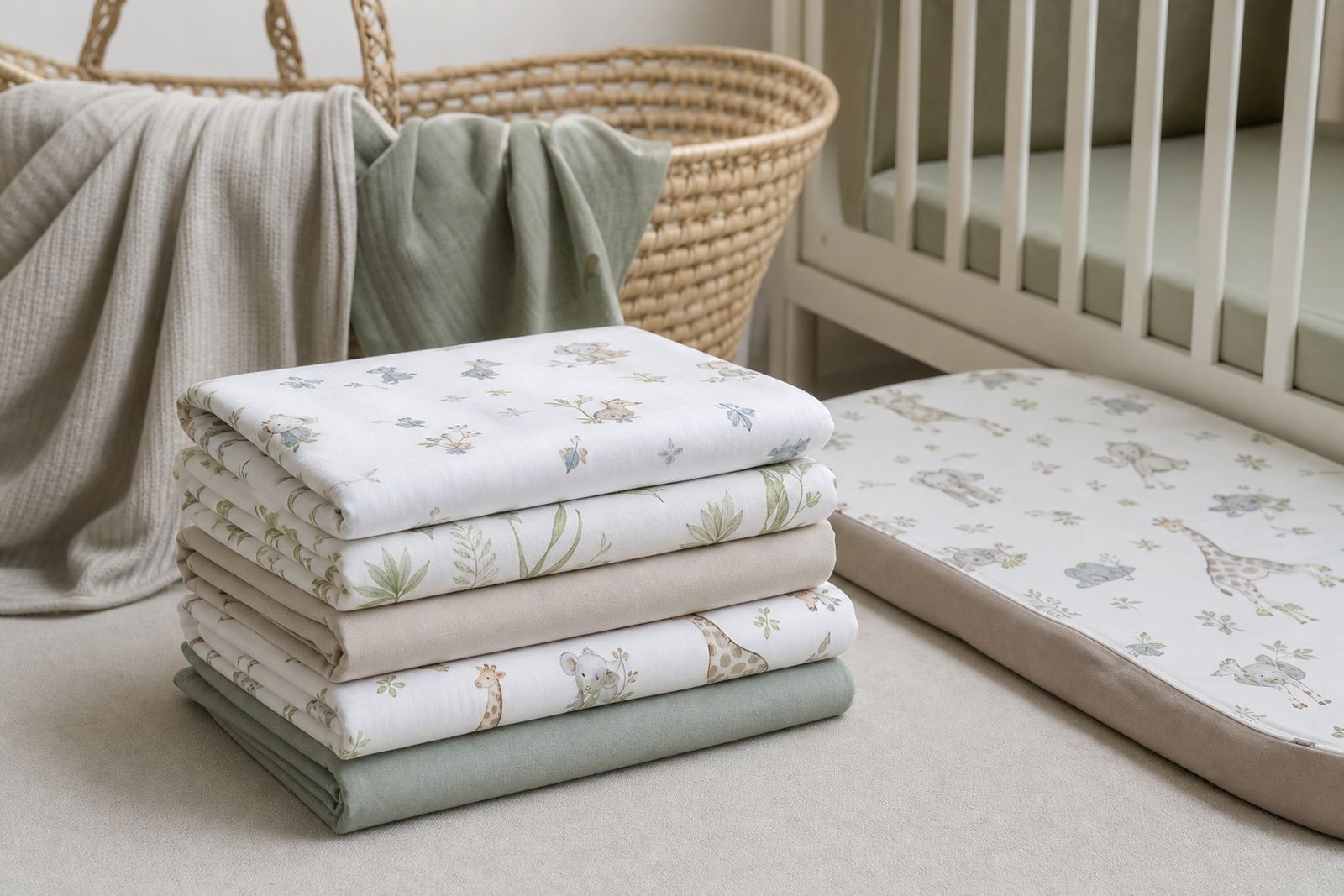
Parents often find that one cot sheet is never enough. A practical nursery setup includes at least two spare sheets, with a third if you want less pressure on laundry days. This is especially useful when you are juggling work, visitors and baby supplies at the same time. Having ready-to-use linen means you are not stuck waiting for a wash cycle to finish before the cot is ready again.
Spare sheets are also helpful when you are planning gifts. A set can be added to a newborn gift box, a baby shower gift or a registry list for friends and family to choose from. When you keep extras on hand, it becomes easier to rotate them and reduce wear on the one sheet you use most often. That small bit of planning can make nursery changes feel less rushed.
- One sheet in use.
- One sheet clean and folded nearby.
- One sheet in reserve for quick changes or unexpected laundry delays.
Check seams, elastic and wash care before you buy
Good cot sheets should be finished neatly. Look at the seams to make sure they are even and not bulky, especially around the corners where tension is highest. The elastic should feel secure but not stiff, and it should run all the way around the fitted edge or be placed firmly at the corners. Loose stitching can make a sheet wear out faster, which is frustrating when you need nursery linen to last.
It also helps to check the wash instructions before buying. Some sheets are simple to care for, while others may need gentler handling. If your household already has a busy washing routine, choose sheets that are easy to clean in a normal laundry cycle. For baby items, avoid adding anything strongly scented or rough handling that could damage the fabric. If you have questions about skin sensitivity or any medical concern, speak to a clinic, midwife or doctor.
Match your sheet choice to the season and daily routine
South African weather can shift quickly, so it is worth thinking about where the cot will stand. A room in Umhlanga may feel humid for much of the year, while a cooler inland home can need a slightly cosier feel. Cot sheets should work with your routine, not against it. If you wash often, dry indoors, or rely on sunny days for drying, keep the fabric choice practical and easy to manage.
It is also useful to think about the rest of the nursery. If you already have changing items, blankets and sleepwear in soft neutral colours, you may prefer cot sheets that blend in. If you are buying for a gift, simple colours and tidy patterns are often the easiest to use with different nursery setups. Avoid overbuying styles you may not use, and keep your choices focused on comfort and easy care.
- Warm rooms: lighter, breathable fabric.
- Cooler rooms: a slightly fuller weave can feel better.
- Busy laundry days: choose sheets that dry quickly and fold neatly.
A simple buying checklist for nursery linen
Use a short checklist before you place an order. It keeps the process simple and helps you choose sheets that actually suit the cot and the household. If you are shopping online and arranging delivery to Durban, Johannesburg, Pretoria, Cape Town or Gqeberha, it helps to know exactly what you need before checking out. That way you can add a spare or pair the sheets with gift wrapping or direct gift delivery if the order is going to someone else.
Here is a useful final check: does the sheet fit the mattress size, does the fabric feel pleasant, will it wash well, and do you have a spare set ready? If the answer is yes to all four, you are on the right track. Keep the focus on fit, care and practicality rather than just looks, and you will end up with nursery linen that works for everyday use, not just for the first photo. It is a small purchase, but it matters more than people often think.
- Confirm mattress size and depth.
- Choose a fabric that suits the season and your laundry routine.
- Keep at least one spare set folded and ready.
- Check seams, elastic and care instructions.