
Start With The Right Size For Your Stay
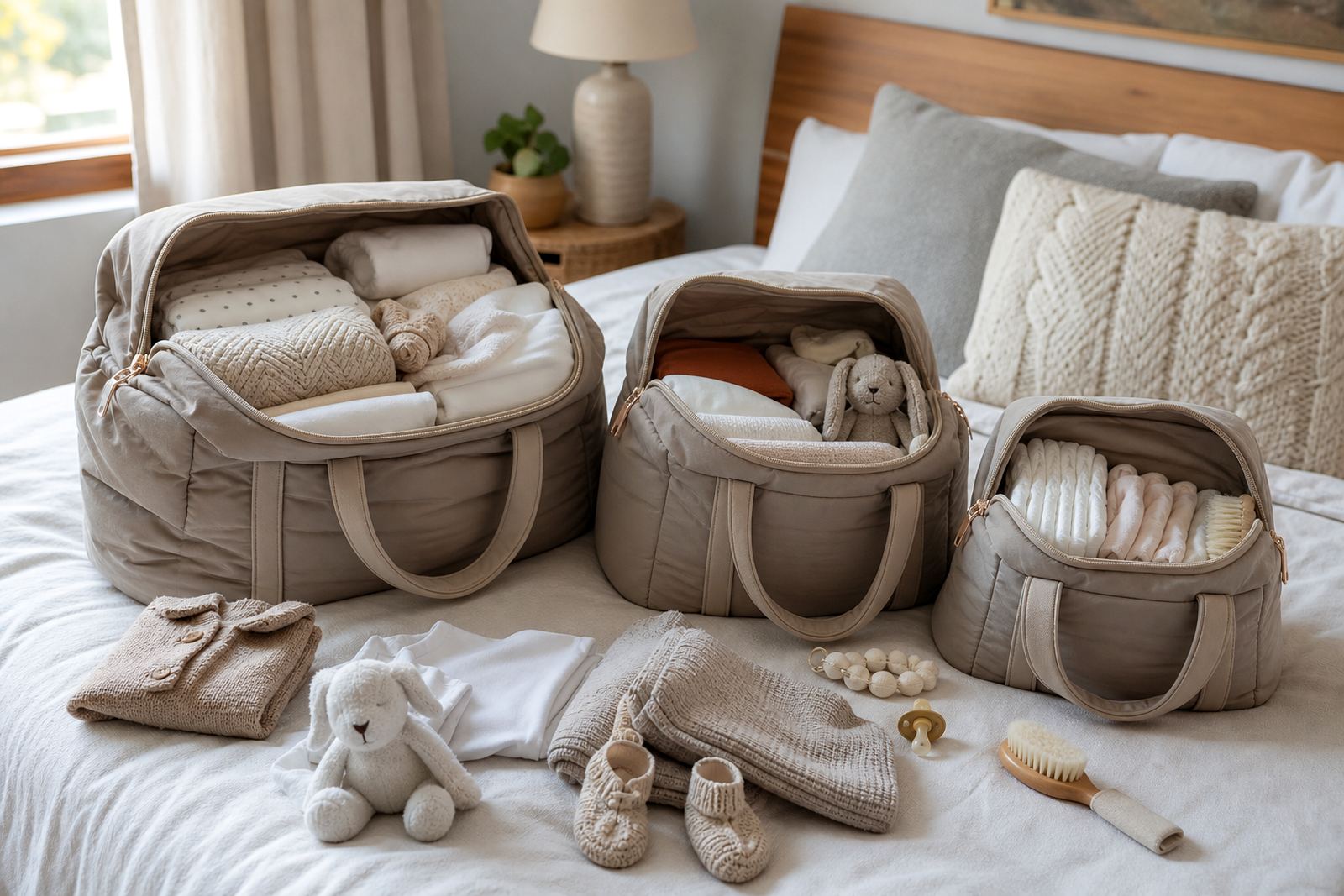
The first question is simple: how much do you need to carry? A compact overnight bag can work for a short hospital stay, while a larger holdall is better if you like to pack extra clothes, toiletries and baby items in one place. Many South African parents prefer a bag that opens wide and holds shape, so it is easier to find things quickly when the taxi or car is waiting outside.
Think about your delivery plan too. If you are going to a private hospital in Durban, a midwife-led unit in Pretoria, or a public facility in Cape Town, the bag should be easy to move and not too bulky for a busy corridor or parking area. A bag that is too large can be awkward in the car boot, while one that is too small gets overfilled and hard to close.
- Choose a smaller bag for a short stay or light packing style.
- Choose a medium to large bag if you want room for toiletries, clothing and baby items.
- Look for a shape that stands upright or keeps its form.
- Make sure the opening is wide enough to see inside without emptying everything out.
Compartments That Keep The Important Things Easy To Find
A good hospital bag should help you stay organised, not force you to rummage through one big pile. Separate sections are useful for baby clothes, your own clothes, documents and small essentials like lip balm, hair ties or charger cables. A zipped inner pocket can keep valuables together, while outer pockets are handy for the items you reach for often.
When you are tired, you want a bag that makes sense at a glance. Clear packing habits help too, especially if someone else may need to find something for you after birth. Use smaller pouches inside the bag for different groups of items, and label them if that helps. This is especially helpful when packing for a second child, because little things can otherwise disappear fast.
- One section for baby clothing and wraps.
- One section for your clothes and toiletries.
- One small pouch for documents, cards and medication you already use.
- One pocket for charger cables, tissues and wipes.
Handles, Straps And Carry Comfort Matter More Than You Think
A hospital bag often gets carried from the car to reception, then from one room to another, so the handles need to feel comfortable. Wide handles are easier on the hand, especially if the bag is full. If you like to carry your bag over the shoulder, check that the strap sits well and does not slip off too easily. Some people prefer a short carry handle and a longer strap for hands-free movement.
If you are walking a bit more than expected, or dealing with parking farther from the entrance, comfort becomes very important. A well-balanced bag is easier to manage than one that pulls to one side. That matters when you are already carrying paperwork, water, and possibly a car seat. A bag with firm stitching around the handles is worth looking for, because weak handles tend to give trouble at the worst time.
- Test the handle length for your height and preferred carry style.
- Check that the strap is easy to adjust if it has one.
- Look for strong stitching at the join points.
- Choose a bag that does not dig into your shoulder or hand when full.
Pack For Practical Access, Not Just For Looks
Style is nice, but packing style is what makes a bag useful. The best hospital bag is the one you can open quickly, find what you need and close again without stress. Keep the heavier items at the bottom and the most urgent items near the top or in an outer pocket. That way you do not have to unpack the whole bag for one item.
A simple packing method is to group items by person or purpose. Put baby items together, keep your own essentials together, and use one small pouch for things that may be needed first. If you are a planner, make a checklist and tick it off while packing. If you are not, keep the list short and practical. There is no need to overpack just because the bag is bigger.
- Baby outfit, blanket and a few spare items.
- Your own outfit, toiletries and comfort items.
- Documents and hospital papers in a flat pocket.
- Snacks or small items only if your hospital allows them.
Check The Fabric, Zip Quality And Cleaning Ease
Hospital bags get opened often and may be placed on different surfaces, so the material should be easy to wipe down. This is especially useful in South African weather, where dust, humidity and sudden rain can affect what you carry. In coastal areas like Umhlanga, Durban or Gqeberha, moisture can linger, so a bag that dries quickly and does not hold smell is a good choice.
Zip quality is worth checking closely. A smooth zip is less frustrating when your hands are full or you are tired. Inner lining should also be neat and easy to clean if something spills. If the bag will be used later as a baby bag, think about how it will hold up once it is used every day for nappies, bottles, clothes and extra changes. A bag that is practical from the start will last longer, and thats often the better value.
- Choose wipe-clean or easy-care materials.
- Check that zips open fully and do not catch.
- Look for lining that is simple to clean with a cloth.
- Prefer materials that can handle day-to-day use after the hospital stay.
What To Pack First When You Are Nearly Ready
If you are choosing a bag close to your due date, start with the items you know you will need first. Pack the bag in stages so nothing gets forgotten. A checklist helps keep the process calm, especially if you are sorting things between work, home and family support. Keep the bag near the door or in the car once it is ready, but only if it stays clean and safe there.
Health questions are best discussed with your clinic, midwife or doctor. For the bag itself, keep the goal simple: easy to carry, easy to open and easy to organise. If you are collecting gift items for a friend, a neatly packed maternity bag can also be paired with a gift box, gift voucher or direct delivery, which is handy for family in Johannesburg, Cape Town, Pretoria or right here in Durban.
- Finish the checklist one category at a time.
- Keep important papers in one flat pocket.
- Place the bag somewhere easy to reach on the day.
- Do a final quick check before leaving home.
A Quick Hospital Bag Checklist To Use Before You Decide
Before you choose a maternity bag, ask yourself whether it works for the real journey, not just how it looks online. A good bag should suit your transport, your packing style and the amount of space you have at home and in the car. It should also be light enough to move around with, even when it is full.
Use this final check: does it have enough room, enough pockets, comfortable handles and a style that feels easy to live with? If yes, you are on the right track. If not, keep looking until you find one that fits your routine. That way, the bag does its job without becoming one more thing to worry about during an already busy time.
- Is the size right for your planned stay?
- Can you reach the things you need quickly?
- Are the handles comfortable when the bag is full?
- Will it be useful after the hospital stay too?