
Start With The Room You Actually Have
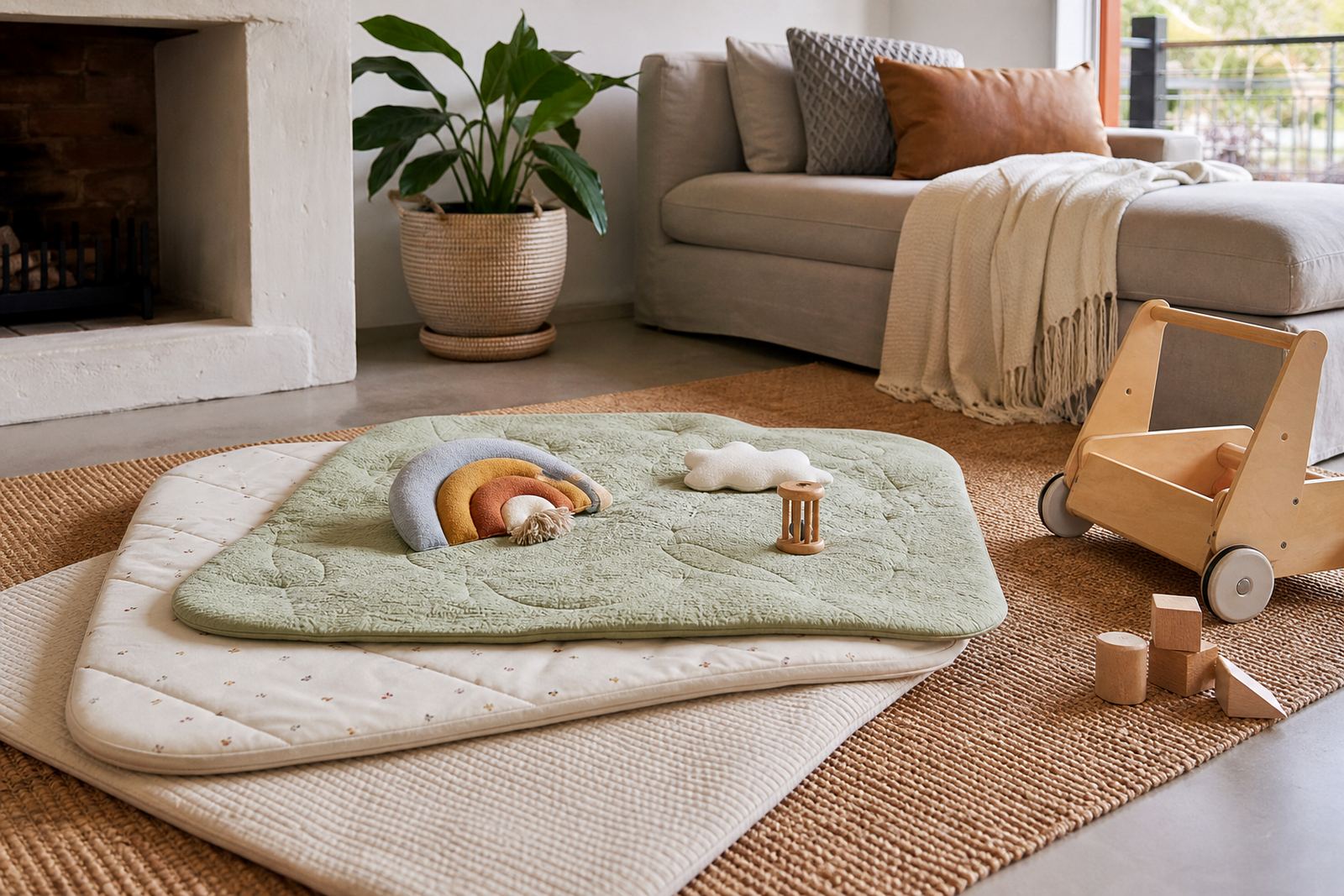
Before you choose a play mat, look at the space where it will be used most often. A flat lounge floor in Umhlanga, a tiled flat in Pretoria or a carpeted room in Pietermaritzburg will each call for something slightly different. Measure the area first, then leave enough space for adults to sit close by during supervised play.
If you plan to move the mat between rooms, between grandparents' homes or on trips, a lighter fold-up option is easier to carry. If it will stay in one place, a larger mat can give better coverage for rolling, stretching and tummy time. Think about how many children might use it too, because siblings and cousins quickly take up more space than expected.
- Measure the floor area before ordering
- Check whether it must fit around furniture
- Choose a size that allows adult supervision from close by
- Decide if it needs to move between rooms or stay put
Thickness: Soft Enough For Play, Firm Enough For Stability
Thickness affects both comfort and stability. A mat that is too thin can feel hard on tiled or concrete floors, especially in colder coastal homes where floors stay cool in winter. A mat that is very thick can feel squishy and make it harder for little ones to balance as they start pushing up, rolling and sitting with support.
For most families, a medium-thickness mat is a practical middle ground. It adds cushioning for supervised floor play without feeling unstable. If the mat will go on a hard surface like tile or laminate, a slightly thicker option can be more comfortable. If it will go on carpet, you may prefer something slimmer so it does not feel overly soft.
- Thinner mats suit carpeted rooms and easy storage
- Medium thickness works well on tile and laminate
- Very thick mats may feel less steady for early movement
- Choose cushioning based on your floor type, not just looks
Foldable Or Fixed: What Works In South African Homes
Foldable play mats are useful when space is tight or when you need to clear the floor for cleaning. They are often easier to store in a cupboard or behind a couch, which helps in smaller flats and townhouses. This can also be handy during load-shedding, when you want a quick, low-fuss setup for play without moving too much furniture.
Fixed mats tend to be better if you want a permanent play area in the lounge, nursery or enclosed patio. They usually stay flatter and may feel more settled for daily use. Ask yourself how often you will pack it away. If that answer is often, foldability matters. If not, ease of use and size may matter more.
- Choose foldable if you need daily storage
- Choose fixed if the play area stays in one place
- Think about who will carry and clean it
- Check how neatly it folds and whether seams will trap crumbs
Easy-Care Surfaces Save Time After Messy Play
Babies spill, dribble and drag toys across the floor, so the surface should be simple to wipe down. A smooth, easy-care finish is practical for everyday use, especially in homes near the coast where humidity can make fabrics take longer to dry. You want a mat that can be cleaned quickly with a soft cloth and mild soap, then left to air dry fully before the next play session.
Avoid anything that holds too much dust, lint or crumbs if you want low-maintenance care. If the surface has a textured side, check that it still wipes clean without trapping dirt in the pattern. Always follow the care instructions that come with the product and keep the mat dry before storing it away.
- Look for a wipe-clean surface for quick daily care
- Choose a finish that dries properly in humid weather
- Check seams and edges for easy cleaning
- Store only when fully dry to avoid musty smells
Safety Checks For Supervised Floor Time
Play mats are for supervised use on the floor, so keep the surrounding area clear. Make sure the mat lies flat and does not curl at the corners, because loose edges can create a trip point for adults and a fiddly spot for toys. Keep cords, loose cushions and heavy objects away from the play area.
For young babies, the mat should be used on a clean, stable surface. If you are using it near a window, make sure there is no direct sun heating the surface too much. For health concerns, or if you are unsure what is suitable for your child, speak to a clinic, midwife or doctor.
- Use only with close adult supervision
- Keep the play area clear of small objects and cords
- Check that the mat lies flat on the floor
- Use on a clean, stable surface away from hazards
A Simple Buying Checklist Before You Order
When you are comparing options, use a simple checklist so the choice is easier. A play mat should suit your home, your routine and the amount of cleaning you are happy to do. For many families in Durban, Johannesburg, Pretoria, Cape Town and Gqeberha, the best option is the one that is easy to use every day, not the one that only looks good in a photo.
If you are buying as a gift, think about what the parents already have. A newborn gift box, maternity gift box or baby shower gift can include practical items, but a play mat works best when it matches the home space and the family's routine. Maata can help with gift wrapping, gift messages, gift bundles, registry help and direct gift delivery across South Africa, including Umhlanga, Ballito and Pietermaritzburg delivery areas.
- Does it suit the floor type at home
- Is it thick enough for comfort but still stable
- Can it be folded, moved or stored with ease
- Will the surface be simple to clean after daily use
- Is it suitable for supervised play in the space you have