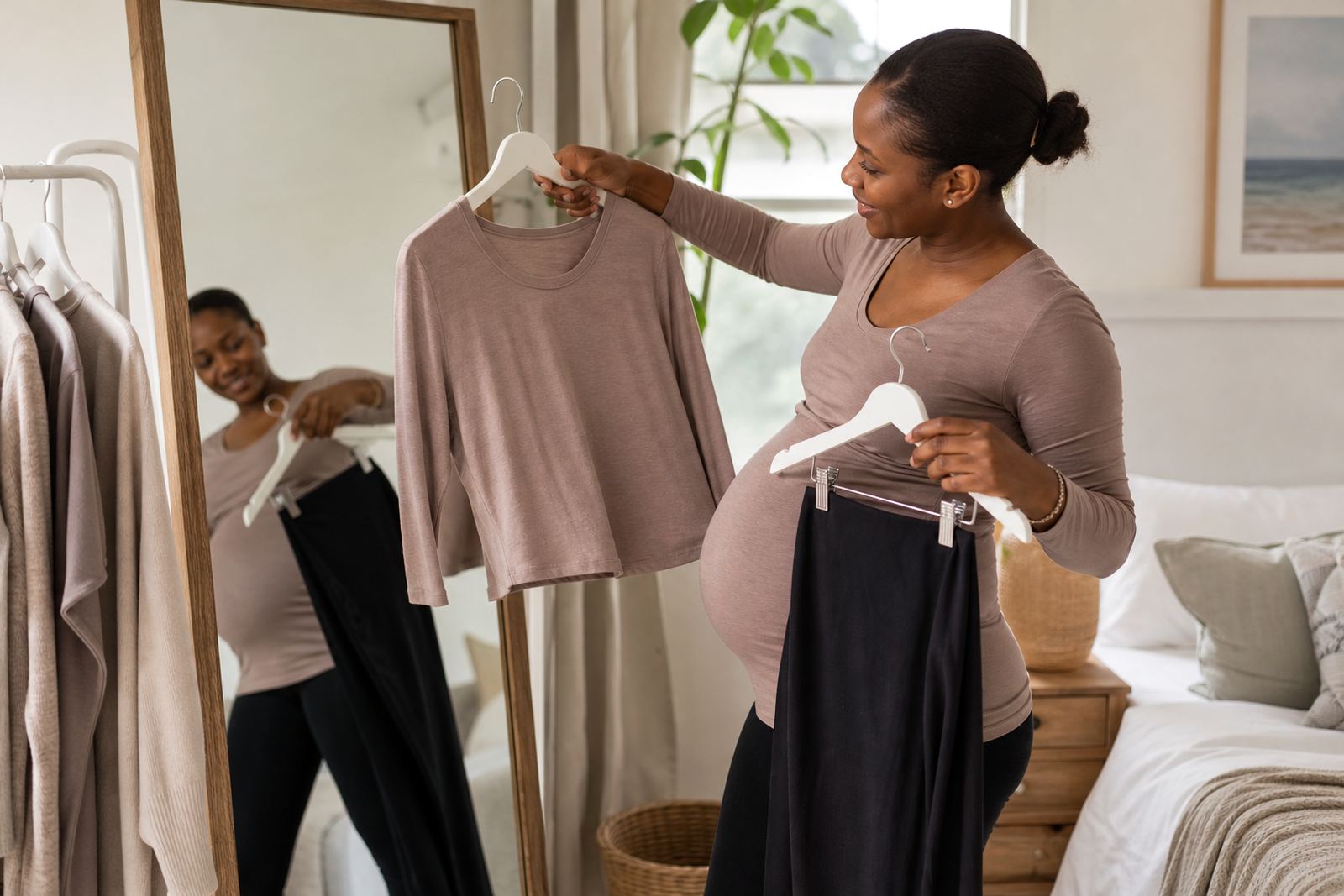
Start with stretch that does not lose shape
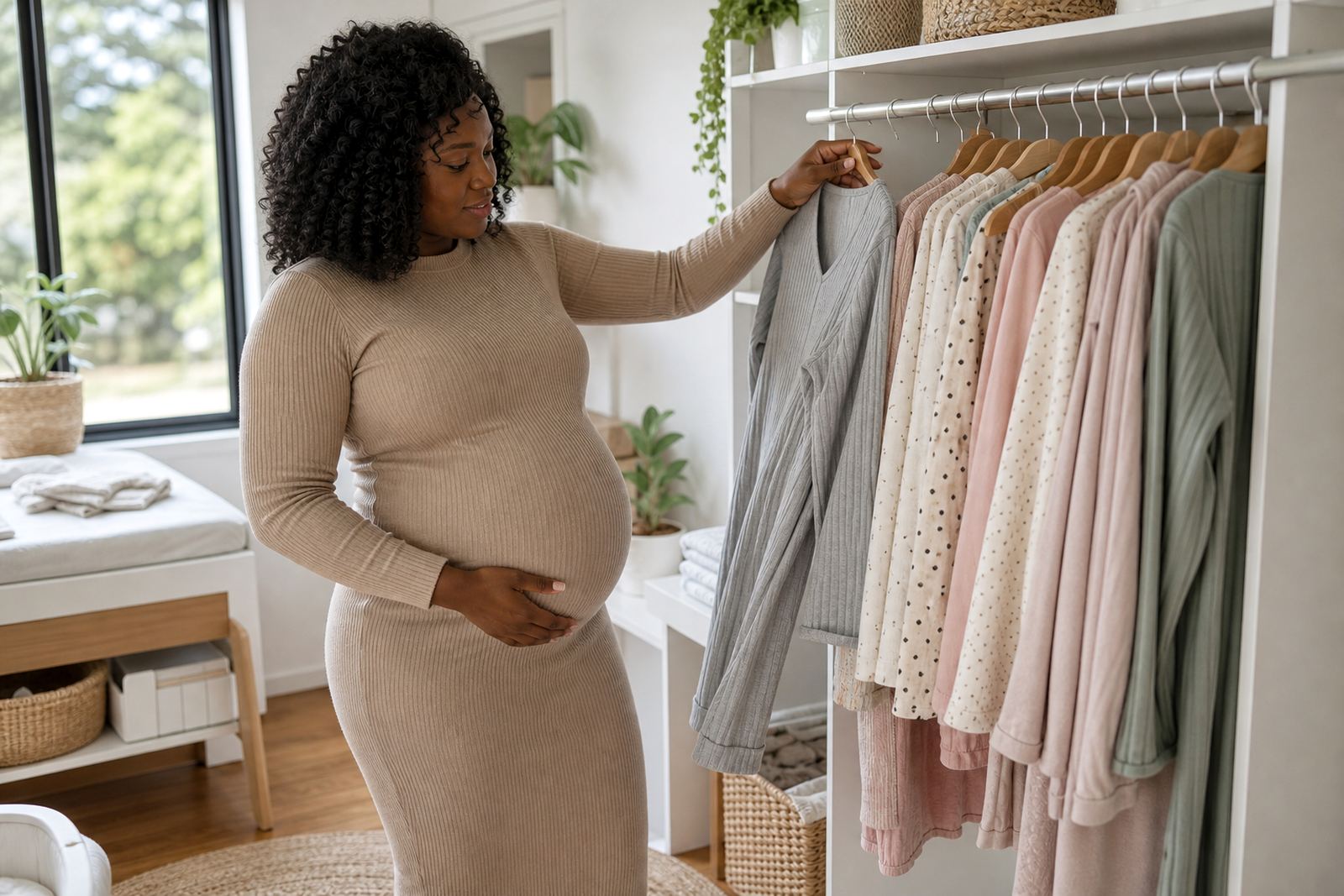
When you are choosing maternity wear, the first thing to check is how the fabric behaves when it stretches. A good top, dress or pair of pants should give room over the bump without turning baggy at the shoulders, sleeves or neckline. Look for fabrics that feel soft but still hold their shape after a full day out, a wash and another wear. In Durban’s humidity, that matters even more because fabric that sags quickly can feel uncomfortable by lunchtime.
Natural fibres and blended fabrics are both useful, as long as they are comfortable against the skin. If a garment feels scratchy in the shop or too stiff around the waist it may only become more irritating later. You also want enough recovery in the fabric so it does not stay stretched out after wearing. A simple rule is this: if it looks neat before you try it on and still looks neat after stretching it lightly, it is worth a closer look.
- Check the waistband, side seams and bust area for give.
- Lift your arms and sit down to see whether the fit still feels easy.
- Choose fabrics that are light enough for warm days but not so thin that they go see-through.
Choose shapes that work from one trimester to the next
Maternity clothing works best when it can adapt as your shape changes. Some pieces suit early pregnancy and remain useful much later, while others only fit one stage. Wrap styles, empire waist cuts, side ruching and gentle A-line shapes often work well because they leave space where needed without looking oversized. A tunic that skims over the bump can also be worn with leggings, fitted pants or even shorts in the warmer months.
It helps to think beyond the current week. If you are in the first trimester, you may not need a full wardrobe change yet, but you may already feel tightness at the waist or bust. For later stages, a piece with adjustable ties or an extra panel can save you from buying too many items that only last a short time. In winter, longer layers are useful for Pretoria mornings and cooler Cape Town evenings, while in summer you may want lighter lengths and shorter sleeves. A few versatile cuts go further than a cupboard full of one-purpose clothes.
- Look for ruching, wrap fronts or side panels that grow with you.
- Pick lengths that can be worn with sandals, flats or sneakers.
- Think about layering so one item can work in different seasons.
Pay attention to support without pressure
Comfort in maternity wear is not only about softness. It is also about where the garment supports the body and where it lets the body breathe. Waistbands should sit gently, not dig in. Bust seams should not pinch, and straps should be broad enough to stay in place without cutting into the shoulders. If a dress has built-in support, make sure it feels comfortable when you move, sit and bend. A little support can be useful, but too much pressure is never worth it.
Many women prefer clothing that feels neat enough for work, school runs or a visit to the clinic, but still easy to wear for several hours. That is especially important in places like Umhlanga, Ballito or Gqeberha where a day can include heat, driving, walking and indoor aircon all in one stretch. If you are unsure about what level of support is safe or suitable for you, ask a clinic, midwife or doctor. Clothing should never feel tight around the chest or abdomen just to look polished.
Pick pieces that suit daily life, not just photos
Good maternity wear should fit into real life. That means laundry, errands, office wear, casual weekends and the unexpected school pickup. A practical wardrobe usually includes a few tops, one or two easy dresses, a pair of comfortable pants and something that can be dressed up for a baby shower or family function. If the item only works for a photo and not for a full day in Durban traffic or a stop at the local shop, it is probably not the best buy.
Before you choose, ask what the item will do for you after the baby arrives too. Some clothing can still be worn during the early weeks of post-birth recovery if it is soft and easy to feed or rest in. That does not mean every maternity item must be nursing wear, but it does help if the style is practical enough to keep in rotation. A few well chosen pieces often give better value than a large amount of special occasion clothing you rarely use. Buying with daily life in mind also makes packing for hospital bags or travel simpler, which is always a plus.
- Choose colours that mix easily with what you already own.
- Make sure the item can be washed without special care that is hard to keep up with.
- Check whether you can wear it for home, outings and visitors.
Look at access, nursing use and simple details
Small details matter. Buttons, zips, overlaps and side openings can make a garment far easier to use later on. Even if you are buying for pregnancy now, it helps to notice how easily the clothing can be opened, adjusted or layered. Wide necklines, cross-over fronts and soft openings are useful features for many new parents, especially when you want to dress quickly and comfortably. That kind of detail is often more useful than decoration.
It is also worth checking stitching, inner seams and hem finishes. If the seams are rough they can rub when you are sitting for long periods or moving around a lot. In humid coastal areas clothing can get worn faster if the fabric and stitching are not well chosen, so little signs of quality matter. A simple design with careful finishing often lasts longer than a busy style with lots of extra trim. And if you are buying online, read the size guide properly instead of guessing. It saves exchanges and frustration.
Build a small wardrobe that covers the whole season
You do not need a large maternity wardrobe to stay comfortable. A small mix of reliable pieces can carry you through most stages if they are chosen well. Start with items that fit now and still work if your body changes a size or two. Then add one or two pieces for weather shifts, such as a cardigan, light layer or longer dress. This approach works well in South Africa where one week can bring heavy rain, warm afternoons and a cool evening all in the same stretch.
For families in Durban and surrounding areas, delivery convenience can make planning easier. If you are shopping from Umhlanga, Pietermaritzburg, Johannesburg, Cape Town or elsewhere in South Africa, it helps to choose clothing that is easy to order, easy to wear and easy to care for. Keep your wardrobe practical, not fussy. The best maternity pieces are the ones you reach for again and again because they simply work.
If you are not sure what to choose, speak to someone experienced in maternity clothing or ask your healthcare provider about any comfort concerns. Style is personal, but comfort during pregnancy should never be an afterthought.